COA Guide
Understanding Peptide Certificates of Analysis
Research Use Only (RUO): Products referenced on this page are intended solely for laboratory research purposes and are not approved for human consumption or medical use.
The 60-Second COA Guide
How to Use This COA Guide
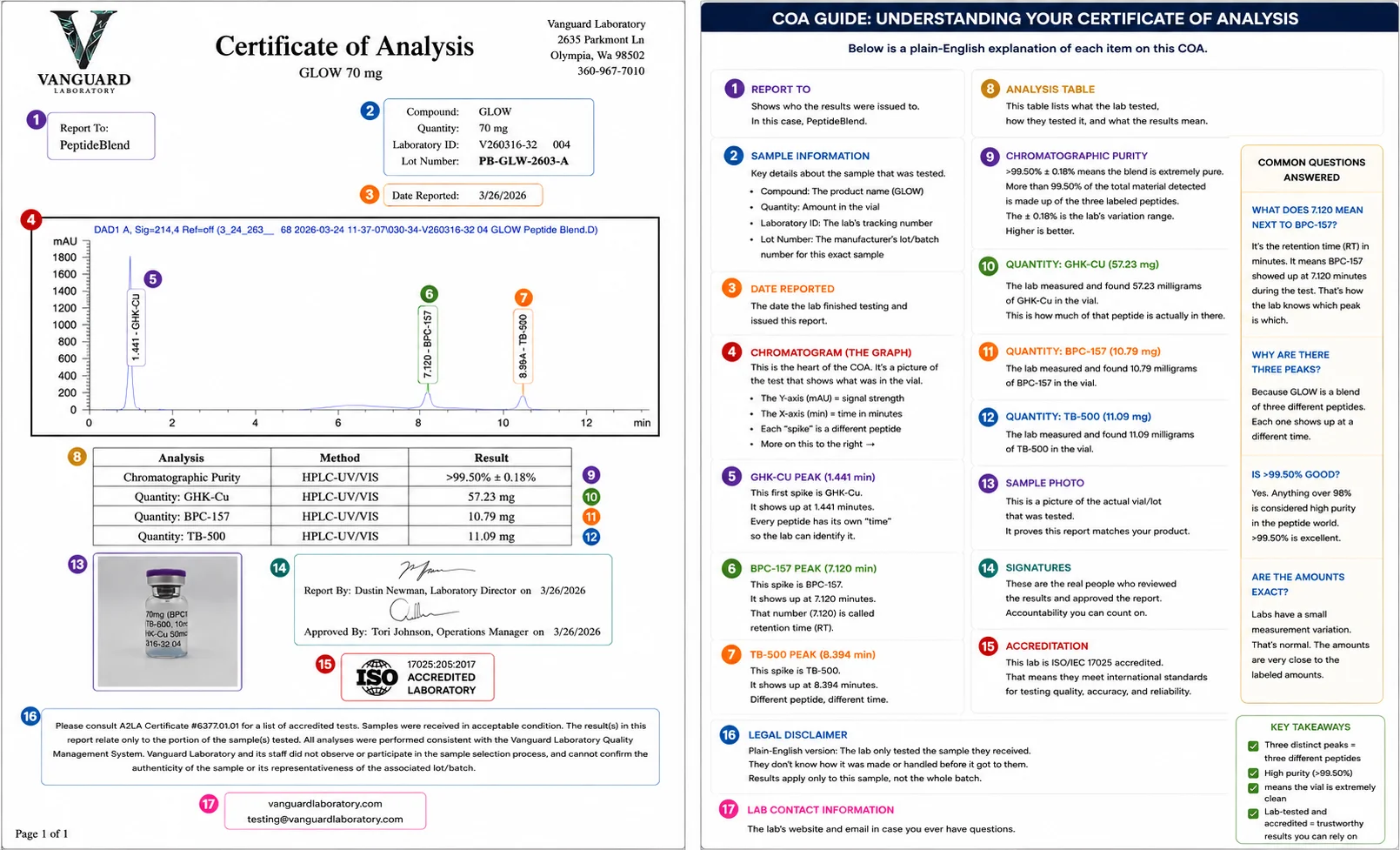
The paired visuals above are designed to help researchers review a peptide certificate of analysis at a glance. The original laboratory report appears on the left, while the numbered companion guide on the right explains the purpose of each major field in plain language.
Start by confirming the sample or compound name, quantity, laboratory identification, lot or batch reference, and report date. Then review the analytical sections, including chromatographic purity, reported results, and any supporting laboratory information relevant to the specific batch being evaluated.
A COA should be reviewed as part of a broader quality-control process, not treated as a standalone marketing image. The most useful reports make it possible to connect the documentation to the exact product or batch under review.
What Is a Peptide COA?
A peptide COA is short for peptide certificate of analysis. It is a report issued after laboratory testing of a submitted sample and is intended to document analytical findings for that sample.
Depending on the testing performed, a peptide COA may identify the material tested, list the analytical method used, show reported purity, include chromatographic data, and provide laboratory or report information. The value of a COA comes from being able to connect the documentation to the specific product or batch being reviewed.
For researchers, a COA for peptides is one part of a larger documentation process. It can help support transparency by showing what was tested, when the analysis occurred, and what the laboratory reported for that submitted sample.
What a Peptide Purity Test Can Show
A peptide purity test is commonly used to evaluate the relative purity of a sample through analytical methods such as high-performance liquid chromatography, often called HPLC.
Reported purity is an important data point, but it should be read in context. A percentage shown on a laboratory report reflects the result of the testing performed on the submitted sample under the stated method and conditions. It does not replace the need to review the product name, batch details, date of analysis, and the rest of the COA.
When reviewing peptide test results, researchers should look for clear documentation that identifies:
- The sample or product name
- The reported purity result
- The test method used
- The laboratory or report information
- The date of analysis
- A batch or lot reference when available
How to Read a Chromatogram
A chromatogram is a visual output from an analytical test. It displays peaks that represent compounds detected in the sample during the testing process.
When learning how to read a chromatogram, the most important point is that the main peak is generally associated with the primary component identified by the test method. Additional peaks may represent other detected components, depending on the sample and the analytical conditions used.
Many peptide COAs use HPLC chromatograms to help document reported purity. The chromatogram should be reviewed alongside the stated purity result rather than by itself. A graph alone does not tell the full story; the sample name, method, report date, and laboratory details matter as well.
For a quick review, look for:
- A clearly labeled sample or product name
- The stated testing method
- A visible chromatogram or analytical graph
- The reported purity percentage
- Report identification and date information
Third-Party Tested Peptides and COA Documentation
Third-party tested peptides are supported by documentation from a laboratory separate from the seller or manufacturer. Independent laboratory testing can provide another layer of transparency by documenting analytical findings for the submitted sample.
For PeptideBlend, COA documentation is intended to help researchers review reported test information before evaluating products for laboratory research. The available report should be reviewed carefully, including its sample identification, test date, analytical method, reported result, and any batch or lot information shown.
A COA does not need to be overly complicated to be useful. The strongest documentation is clear enough that a researcher can identify the material being referenced, understand what was tested, and see the result reported by the laboratory.
How to Verify a Peptide COA
COA verification means reviewing a certificate of analysis to determine whether the document appears relevant, readable, and connected to the material being evaluated.
Before relying on a COA, researchers should confirm that the document clearly identifies the product or sample, includes the reported purity and testing method, shows the date of analysis, identifies the laboratory or report issuer, and provides a batch or lot reference when applicable.
- Product or sample name
- Batch or lot reference, when provided
- Date of analysis
- Reported purity
- Testing method
- Laboratory or report details
Frequently Asked Questions About Peptide COAs
What is a peptide COA?
A peptide COA is a certificate of analysis associated with a tested sample. It may include sample identification, reported purity, the analytical method used, chromatographic data, laboratory information, and the date of analysis.
What does a peptide purity test show?
A peptide purity test provides an analytical result for the submitted sample under the stated testing method. The reported purity should be reviewed together with the sample name, test method, laboratory details, and batch documentation.
How do you read a chromatogram?
A chromatogram is a graph created during analytical testing. The main peak is generally associated with the primary component identified by the method, while additional peaks may represent other detected components. Review the graph alongside the stated purity result and the rest of the COA.
What should a certificate of analysis include?
A useful certificate of analysis should clearly identify the sample, show the test method and reported result, include a date of analysis, identify the laboratory or report issuer, and provide batch or lot information when applicable.
What is COA verification?
COA verification is the process of reviewing a certificate of analysis for clarity, relevance, and traceability. This includes checking the product name, reported purity, test method, report date, laboratory details, and batch or lot reference where available.
Why do batch numbers and test dates matter on a COA?
Batch numbers, lot references, and test dates help researchers determine whether a laboratory report appears connected to the material being reviewed. They add context and traceability to the reported test results.
Are third-party tested peptides supported by a COA?
A COA can document the analytical results reported by a third-party laboratory for a submitted sample. Researchers should still review the full document, including sample identification, date, test method, reported result, and any batch linkage shown.
Continue Your Research
Review PeptideBlend’s available documentation, explore the Research Hub, or browse research-use products.