The Titan Protocol (Reta-GLP3-60mg + Ipamorelin + CJC-1295 + GLOW + NAD+)
Research Products and Multi-Vial Bundles
The Titan Protocol (Reta-GLP3-60mg + Ipamorelin + CJC-1295 + GLOW + NAD+)
$634.10
Retail Price: $746.00
Buy 1-2 Bundles: $634.10 (15% Off)
Buy 3+ Bundles: $575.11 (30% Off) Cart automatically adjusts.
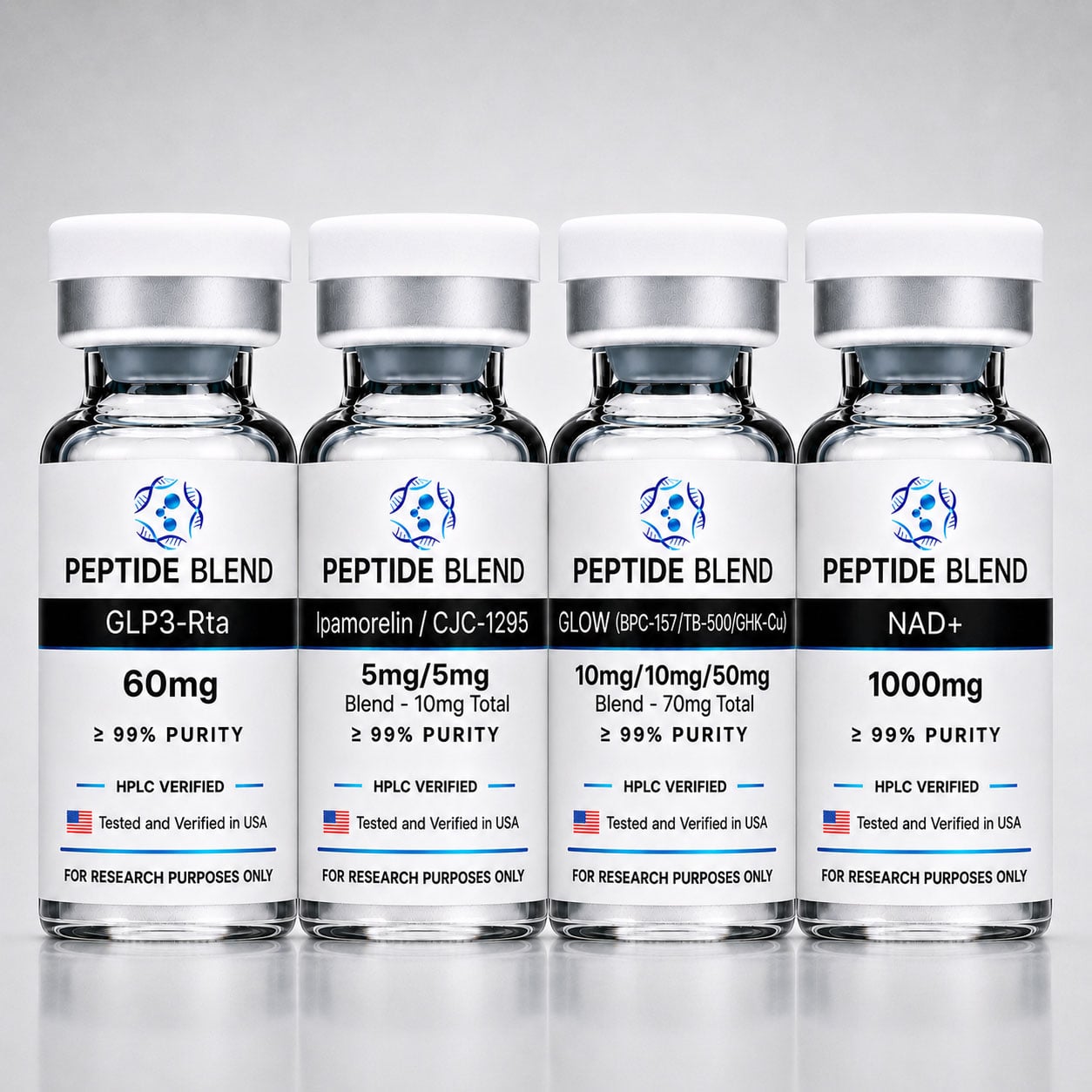
Titan Protocol (Reta-GLP3-Rta 60mg + Ipamorelin/CJC-1295 + GLOW + NAD+): a multi-vial research configuration combining metabolic, peptide-signaling, and cellular research compounds for laboratory investigation of integrated signaling pathways and multi-compound research models. Each peptide is independently tested and verified at ≥99% purity.
Research Summary
The Titan Protocol combines multiple compounds frequently studied in laboratory environments for their involvement in endocrine signaling pathways, peptide communication systems, and cellular metabolic regulation networks.
Research investigations commonly examine:
- Incretin receptor signaling pathways
- Growth hormone regulatory systems
- Cellular peptide communication networks
- Multi-peptide biochemical signaling systems
- Cellular metabolic regulation pathways
By combining several peptide signaling systems within a single stack, laboratory models can explore complex multi-pathway biochemical communication networks involving endocrine receptors, peptide signaling pathways, and cellular metabolic cofactors.
Available Vial Options

Stack Composition
The Titan Protocol research stack includes the following compounds:
- GLP3-Rta — triple incretin receptor agonist peptide studied for interaction with GLP-1, GIP, and glucagon receptor signaling pathways
- Ipamorelin / CJC-1295 peptide blend — dual-peptide formulation studied for interaction with growth hormone regulatory pathways within the hypothalamic–pituitary axis
- GLOW peptide blend — multi-peptide formulation containing BPC-157, TB-500, and GHK-Cu studied for cellular signaling and peptide communication pathways
- NAD+ — cellular metabolic coenzyme studied in mitochondrial bioenergetic systems and redox signaling pathways
Together, these compounds provide a multi-system research model involving endocrine receptor signaling, peptide communication pathways, and cellular metabolic regulation systems.
Technical Specifications
| Product Name | The Titan Protocol |
| Product Category | Multi-compound peptide research stack |
| Stack Components | Reta-GLP3-Rta Ipamorelin / CJC-1295 GLOW peptide blend NAD+ |
| Reta-GLP3-Rta Vial Range | 60mg |
| Ipamorelin / CJC-1295 Blend Size | 10mg (5mg / 5mg) |
| GLOW Blend Size | 70mg |
| NAD+ Vial Size | 1000mg |
| Purity | ≥99% (HPLC verified) |
| Testing Location | Tested and verified in the USA |
| Testing | Third-party verified |
| Intended Use | Laboratory research only |
Research Compound Profile
| Attribute | Description |
|---|---|
| Stack Type | Multi-compound peptide research stack |
| Component Peptides | Reta-GLP3-Rta |
| Additional Peptides | Ipamorelin, CJC-1295, BPC-157, TB-500, GHK-Cu |
| Additional Compound | NAD+ |
| Research Category | Integrated endocrine and metabolic signaling |
| Compound Form | Lyophilized powders |
| Purity Verification | ≥99% via HPLC |
Mechanism of Action
In laboratory models, the compounds within the Titan Protocol stack are examined for their interaction with multiple biochemical signaling pathways involving endocrine receptors, peptide communication systems, and cellular metabolic regulation networks.
GLP3-Rta is studied for its interaction with incretin receptor signaling pathways, including:
- GLP-1 receptor signaling
- GIP receptor signaling
- Glucagon receptor interaction
These receptor systems are frequently investigated for their role in metabolic hormone communication networks and endocrine regulatory pathways.
The Ipamorelin / CJC-1295 peptide blend is studied for interaction with growth hormone regulatory systems, including:
- Ghrelin receptor signaling pathways
- Growth hormone releasing hormone receptor interaction
- Hypothalamic–pituitary endocrine communication systems
The GLOW peptide blend is examined for its interaction with cellular signaling pathways and peptide-mediated biochemical communication networks, including peptides:
- BPC-157
- TB-500
- GHK-Cu
NAD+ functions as a biological redox coenzyme, studied for its role in cellular metabolic systems including:
- Mitochondrial energy metabolism
- Oxidative phosphorylation
- Cellular redox reactions
- Metabolic enzyme signaling pathways
Research investigations explore how these compounds may influence:
- Integrated endocrine signaling networks
- Multi-peptide communication pathways
- Cellular metabolic regulatory systems
- Multi-compound biochemical signaling interaction models
The combination of receptor-mediated peptide signaling and cellular metabolic cofactors allows researchers to examine complex biochemical communication networks within controlled laboratory environments.
Areas of Scientific Investigation
Preclinical and mechanistic studies examining peptide signaling systems frequently investigate:
- Incretin receptor signaling pathways
- Growth hormone regulatory systems
- Cellular peptide communication networks
- Multi-compound biochemical signaling systems
- Cellular metabolic regulatory pathways
All references reflect controlled laboratory research environments only and do not imply therapeutic application.
Storage & Handling
- Store lyophilized compounds at 2–8°C
- Protect from light and moisture
- Maintain sterile laboratory handling conditions
- Reconstituted materials should be managed according to research protocol standards
Quality & Verification
PeptideBlend research compounds are:
- Tested and verified in the United States
- Produced under controlled laboratory conditions
- Third-party tested for identity and purity
- Verified at ≥99% purity via HPLC analysis
Certificates of Analysis (COA) available upon request.
Frequently Asked Questions
What is The Titan Protocol stack?
The Titan Protocol is a multi-compound peptide research stack combining GLP3-Rta, Ipamorelin / CJC-1295, the GLOW peptide blend, and NAD+, studied in laboratory environments for their interaction with endocrine signaling and cellular metabolic pathways.
What compounds are included in The Titan Protocol stack?
The stack includes:
- GLP3-Rta
- Ipamorelin
- CJC-1295
- BPC-157
- TB-500
- GHK-Cu
- NAD+
These compounds are studied in laboratory models examining multi-pathway biochemical signaling systems.
What research areas investigate compounds included in The Titan Protocol?
Laboratory investigations frequently examine:
- Incretin receptor signaling pathways
- Growth hormone regulatory systems
- Cellular peptide communication pathways
- Cellular metabolic regulation systems
Is The Titan Protocol stack intended for human use?
No. This product is supplied strictly for laboratory research and analytical purposes.
Scientific Literature Context
Scientific literature examining incretin receptor agonists, growth hormone secretagogue peptides, and cellular metabolic cofactors frequently investigates integrated endocrine signaling pathways and biochemical communication networks.
Research involving compounds such as GLP3-Rta, Ipamorelin, CJC-1295, BPC-157, TB-500, GHK-Cu, and NAD+ contributes to the understanding of multi-pathway signaling systems studied within controlled laboratory environments.
Research Use Disclaimer
This product is intended strictly for laboratory research and analytical purposes only.
Not for human consumption.
Not for diagnostic, therapeutic, or veterinary use.
PeptideBlend does not market or sell products for medical or pharmaceutical application.